In This Article
The Divine Drum
The mridangam (from mrit meaning clay and anga meaning body) is the primary percussion instrument of Carnatic music. Hindu mythology credits Lord Ganesha and Lord Nandi with playing the mridangam, and the instrument is considered sacred — always treated with reverence by musicians who touch it to their forehead before playing.
Construction & Sound
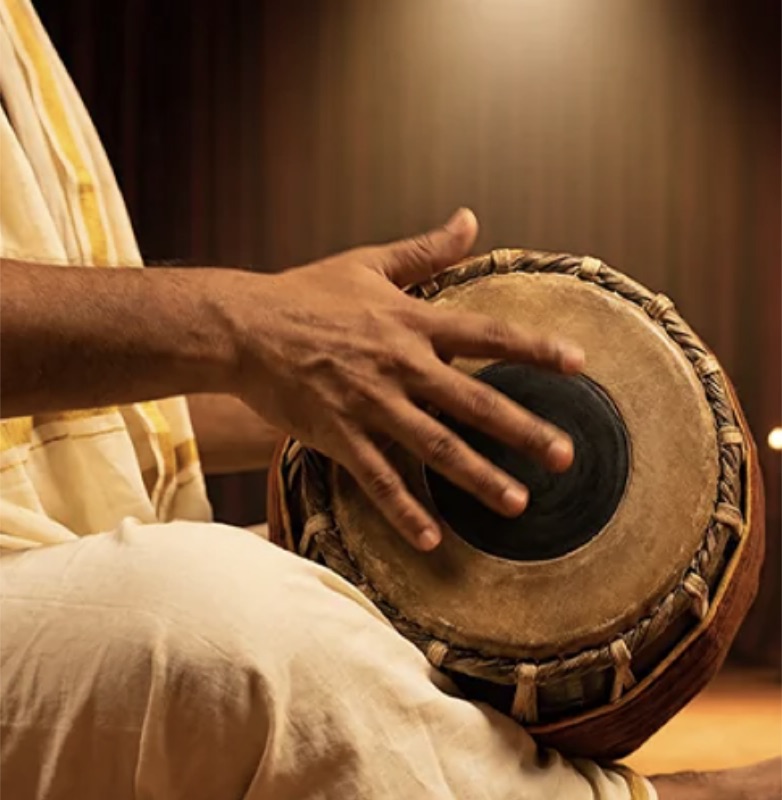
A mridangam is a double-headed barrel drum carved from jackfruit wood. The right head (valanthalai) is tuned to the pitch of the concert and produces a clear, resonant tone thanks to a permanent black paste called soru applied at its centre. The left head (thoppi) is covered with a temporary paste of semolina and water before each performance, producing a bass tone. The interplay between these two tones — sharp right and booming left — creates the mridangam's rich, complex voice.
Role in a Concert
The mridangist's role is multifaceted: providing rhythmic support during compositions, engaging in interactive dialogue during kalpanaswaram, and performing the thani avartanam (percussion solo). A great mridangist is both invisible (seamlessly supporting the vocalist) and spectacular (during solo passages). The art lies in knowing when to be understated and when to shine.
Legendary Players
Palghat Mani Iyer is widely regarded as the greatest mridangam artist, whose accompaniment with M.S. Subbulakshmi created legendary recordings. Umayalpuram K. Sivaraman and Karaikudi Mani expanded the instrument's vocabulary, while contemporary masters continue to push boundaries in technique and expression.