
In This Article
Early Life & Training
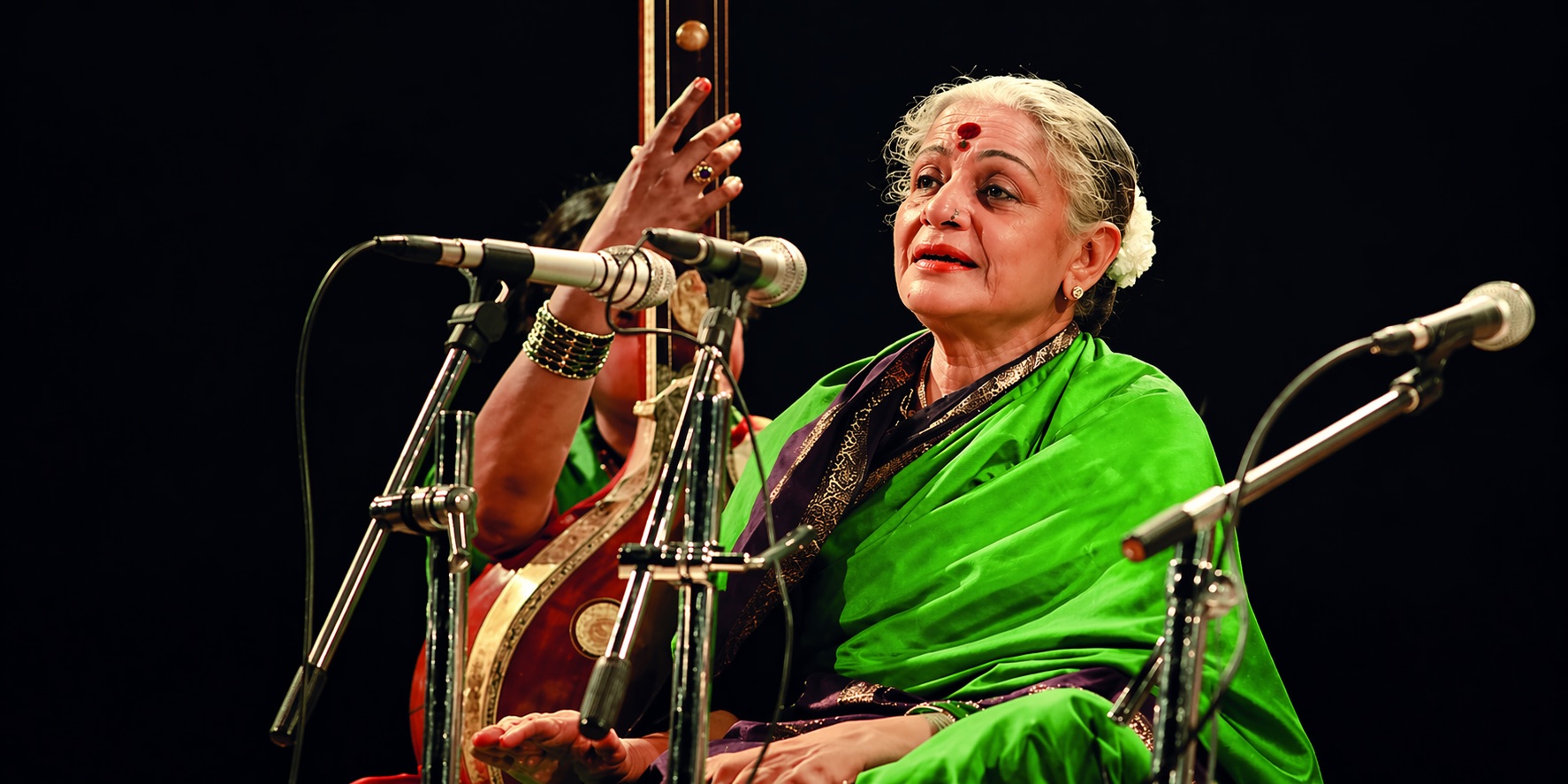
Madurai Shanmukhavadivu Subbulakshmi (1916–2004) was born into a musical family in Madurai. Her mother, Shanmukhavadivu, was a veena player and singer. Young Subbulakshmi gave her first public concert at the age of 11 at the Madras Music Academy — the same institution that would later honour her with its highest title, Sangeetha Kalanidhi, in 1968.
The Voice That Defined an Era
M.S. Subbulakshmi's voice was unique in its purity, range, and emotional transparency. Whether rendering Tyagaraja's devotional kritis, Dikshitar's elaborate compositions, or Meera's simple bhajans, her voice carried an unmistakable quality of bhakti — genuine devotion that transcended the boundaries of language, region, and even religion. Her renditions of "Kurai Onrum Illai" and "Bhaja Govindam" remain definitive decades later.
"Her voice is the voice of the millennium." — Lata Mangeshkar
On the Global Stage
In 1966, M.S. Subbulakshmi performed at the United Nations General Assembly — the first Indian musician to do so. Her concert at the Edinburgh Festival and numerous international tours introduced Carnatic music to global audiences. Mahatma Gandhi was known to delay his prayer meetings to listen to her sing. Jawaharlal Nehru called her the "Queen of Music."
An Immortal Legacy
Awarded the Bharat Ratna in 1998 — the first musician to receive India's highest civilian honour — M.S. Subbulakshmi's legacy extends far beyond awards. She demonstrated that Indian classical music could move millions without compromise. Her recordings continue to introduce new generations to Carnatic music, and her name remains synonymous with musical perfection and spiritual depth.