In This Article
Origin Story
Legend credits the 13th-century musician Amir Khusrau with splitting the pakhawaj (an older barrel drum) in two to create the tabla, though the instrument's actual history is likely more complex. What is certain is that by the 18th century, the tabla had become the primary accompanying percussion instrument for Khayal singing and was developing its own rich solo tradition.
Two Drums, Infinite Sounds
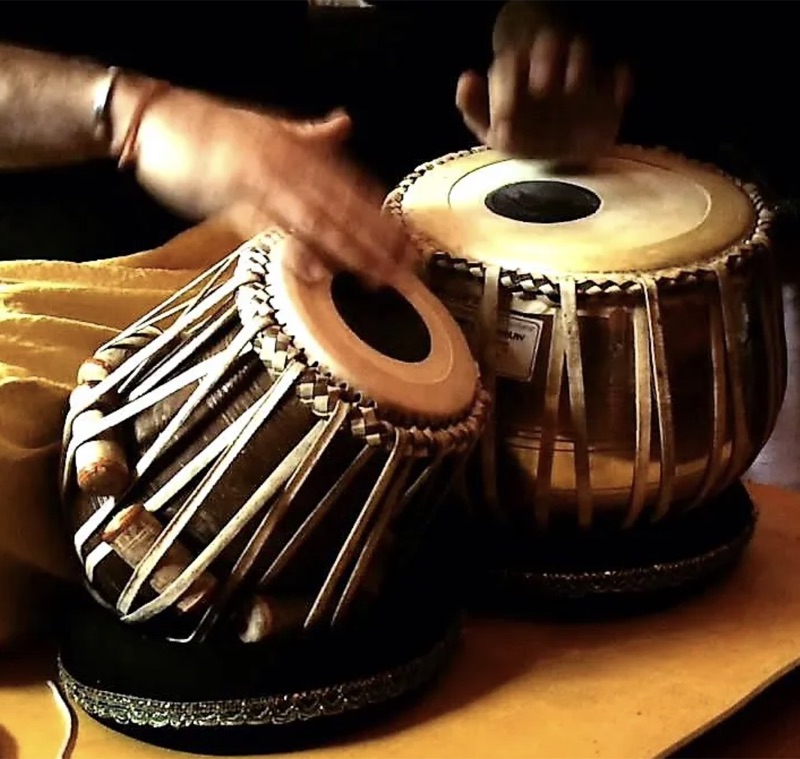
The tabla consists of two drums: the dayan (right, smaller, wooden) tuned to a specific pitch, and the bayan (left, larger, metal with a curved body) providing bass. The dayan uses a black tuning paste (syahi) that enables its distinctive ringing tone. Through combinations of finger strokes, palm pressure, and wrist movements, a tabla player can produce an extraordinary range of sounds, each with its own spoken syllable — na, tin, dha, ge, ke, tun — forming a complete rhythmic language called bol.
Tabla Gharanas
Six major gharanas define tabla playing: Delhi (clarity and power), Lucknow (elegance and fingertip work), Ajrada (speed and bounce), Farukhabad (a synthesis of styles), Benares (raw energy and loud playing), and Punjab (heavy bass and power strokes). Each gharana has its signature compositions, stroke patterns, and aesthetic preferences.
Beyond Accompaniment
While the tabla is primarily an accompanying instrument, tabla solos are concert events in themselves. Masters like Zakir Hussain have elevated tabla to a global stage, demonstrating its potential for cross-cultural dialogue while maintaining its classical roots. Ustad Allah Rakha, Zakir's father and guru, established the tabla as a respected solo instrument through decades of groundbreaking performances.