
In This Article
Arriving and Settling In: The First Impression You Make
There is an old saying among Carnatic musicians: "The audience sets the stage before the artist does." Whether you are attending a concert at the Music Academy in Chennai during the December Season, a Sawai Gandharva Bhimsen Mahotsav recital in Pune, or an intimate baithak in a Kolkata drawing room, how you arrive and settle in speaks volumes about your respect for the art form.
Arrive early. This is perhaps the single most important rule. In Carnatic concerts, the opening piece — often a varnam such as Ninnukori in Mohanam or Viriboni in Bhairavi — establishes the artist's tone and intent for the evening. Missing it is akin to walking into a novel at chapter three. In Hindustani concerts, the alaap that opens a raga exposition is sacred, unhurried territory; the artist is essentially introducing the raga's personality note by note. Arriving late during an alaap, with the inevitable rustling and seat-finding, is deeply disruptive.
Aim to be seated at least ten minutes before the scheduled start. At prestigious venues like the Shanmukhananda Hall in Mumbai or the Thyagaraja Gana Sabha in Chennai, seating is often unreserved and fills quickly. At smaller, more intimate gatherings — the kind that organisations like SPIC MACAY or the ITC Sangeet Research Academy regularly host — late entry may not even be permitted once the artist has begun.
- Remove your footwear if the concert is in a temple or traditional setting — this is non-negotiable.
- Choose your seat wisely. If you suspect you may need to leave early, sit near the aisle or at the back. Do not occupy a front-row seat only to vacate it mid-concert.
- Silence your mobile phone before you sit down — not after the first ring embarrasses you. Better still, switch it off entirely. The glow of a phone screen in a dimly lit auditorium is almost as distracting as a ringtone.
During the Performance: The Art of Active, Respectful Listening
Indian classical music is not a passive experience. Unlike Western classical concerts, where audiences maintain near-total silence until the final note, the Indian tradition actively invites audience participation — but of a very specific kind.
Keeping tala is welcomed and, in Carnatic music, practically expected. Experienced rasikas keep the beat with subtle hand gestures, marking the samam (the first beat of a rhythmic cycle) with quiet precision. However, there is a fine line between keeping tala for your own engagement and clapping so loudly that you become a percussive addition to the ensemble. Keep your tala-marking gentle and contained, especially during soft passages like a niraval or kalpanaswaram section.
Verbal appreciation is another cherished feature. Exclamations of "Bhesh!", "Kya baat hai!", or "Shabash!" in Hindustani concerts, and "Bale!" or simply a murmured "Aah" in Carnatic settings, are the audience's way of telling the artist, "We are with you. We understand what you just did." When Pandit Jasraj used to land on a breathtaking sam after an extended taan, or when T.M. Krishna resolves a complex rhythmic pattern in a thillana, the audience's spontaneous response is part of the concert's energy. But this appreciation must be organic and well-timed. Shouting "Wah wah!" during a contemplative vilambit passage in Yaman or applauding in the middle of a Carnatic raga alapana breaks the meditative spell the artist is weaving.
"The best audiences are those that breathe with the music," the legendary Kishori Amonkar once observed. "They know when to be silent and when to respond. That silence is also a form of appreciation."
A few firm prohibitions:
- Do not talk to your neighbour during the performance, not even in whispers. If you must communicate, wait for a natural pause — the brief moment between two compositions, for instance.
- Do not photograph or record unless the organisers have explicitly permitted it. Many sabhas, including the Music Academy, have strict no-photography policies during concerts. Even where permitted, the click of a camera shutter or the red recording light of a phone is profoundly distracting. Artists like Bombay Jayashri and Rashid Khan have publicly expressed their discomfort with unauthorised recording.
- Do not walk out during a piece. If you must leave — for any reason — wait for the gap between compositions. In a Carnatic concert, this might be after the artist finishes a kriti and before the next one begins. In a Hindustani concert, the natural break comes when the artist pauses between two ragas or between the vilambit and drut sections of a bandish.
Intervals, Requests, and How the Two Traditions Differ
Carnatic and Hindustani concerts have meaningfully different structures, and etiquette adapts accordingly.
Carnatic concerts typically follow a well-established format: a varnam, followed by kritis of ascending complexity, a main piece (often with elaborate raga alapana, niraval, and kalpanaswaram), a ragam-tanam-pallavi in some concerts, lighter pieces, and a mangalam to close. Concerts at the December Season in Chennai are usually allotted two to three hours, and there is rarely a formal interval. Audience members may quietly step out between pieces, but the expectation is that you stay for the duration. Leaving before the mangalam — the brief closing benediction, often Pavamana Suthudu in Saurashtram or a short piece in Suruti — is considered disrespectful, much like leaving a temple before the final aarti.
Hindustani concerts tend to be more fluid in structure. A typical evening might feature two or three ragas across three to four hours, with a brief interval. The Sawai Gandharva festival in Pune and the Dover Lane Music Conference in Kolkata are known for concerts that stretch well past midnight. Here, intervals are common, and stepping out for chai during them is perfectly acceptable. However, the same rule applies: do not leave during a raga exposition.
Song requests occupy a delicate space. In Carnatic music, writing a request slip — a small chit of paper with the name of a kriti and its raga — and passing it to the artist or organiser is a long-standing tradition, particularly in temple concerts and private gatherings. At the Music Academy or similar sabhas, however, this is less common. In Hindustani concerts, farmaish (requests) are generally made verbally during a pause, and only in intimate, semi-private mehfil settings. At a large public concert, calling out a request can be perceived as presumptuous. The artist has curated a programme with care; trust their judgement.
One important note about applause: in Carnatic concerts, clapping typically occurs after a particularly brilliant round of kalpanaswaram or at the conclusion of a major kriti. In Hindustani concerts, applause is rarer — the verbal "Wah wah" tradition largely replaces it. However, at larger, more public Hindustani concerts, clapping has become more common in recent decades, influenced perhaps by Western concert culture. Use your judgement and follow the room.
After the Last Note: Post-Concert Conduct and Meeting Artists
The concert does not truly end when the music stops. How you conduct yourself afterwards is an extension of the respect you have shown throughout the evening.
Stay for the full concert. This bears repeating. Many artists save their most emotionally resonant pieces for the final stretch — a Carnatic artist might offer a deeply moving Sindhubhairavi viruttam, or a Hindustani vocalist might close with a luminous bhajan in Bhairavi. These closing pieces are gifts; receive them graciously.
If you wish to greet the artist after the concert, a few guidelines apply:
- Wait for them to step off the stage or dais. Do not rush the stage the moment the final note fades.
- Keep your compliments specific and sincere. Saying "Your Todi was extraordinary — the way you developed the uttaranga in the alapana was deeply moving" means far more to an artist than a generic "Very nice concert." It tells them you were truly listening.
- If you wish to take a photograph with the artist, ask permission. Most artists are gracious about this, but they have just completed a physically and emotionally demanding performance. Read the moment.
- If there is a green room, do not enter unless invited. Senior musicians like the late M.S. Subbulakshmi, Pandit Bhimsen Joshi, or in our time, Bombay Jayashri and Pandit Ajoy Chakraborty, often need a few minutes of quiet before meeting well-wishers.
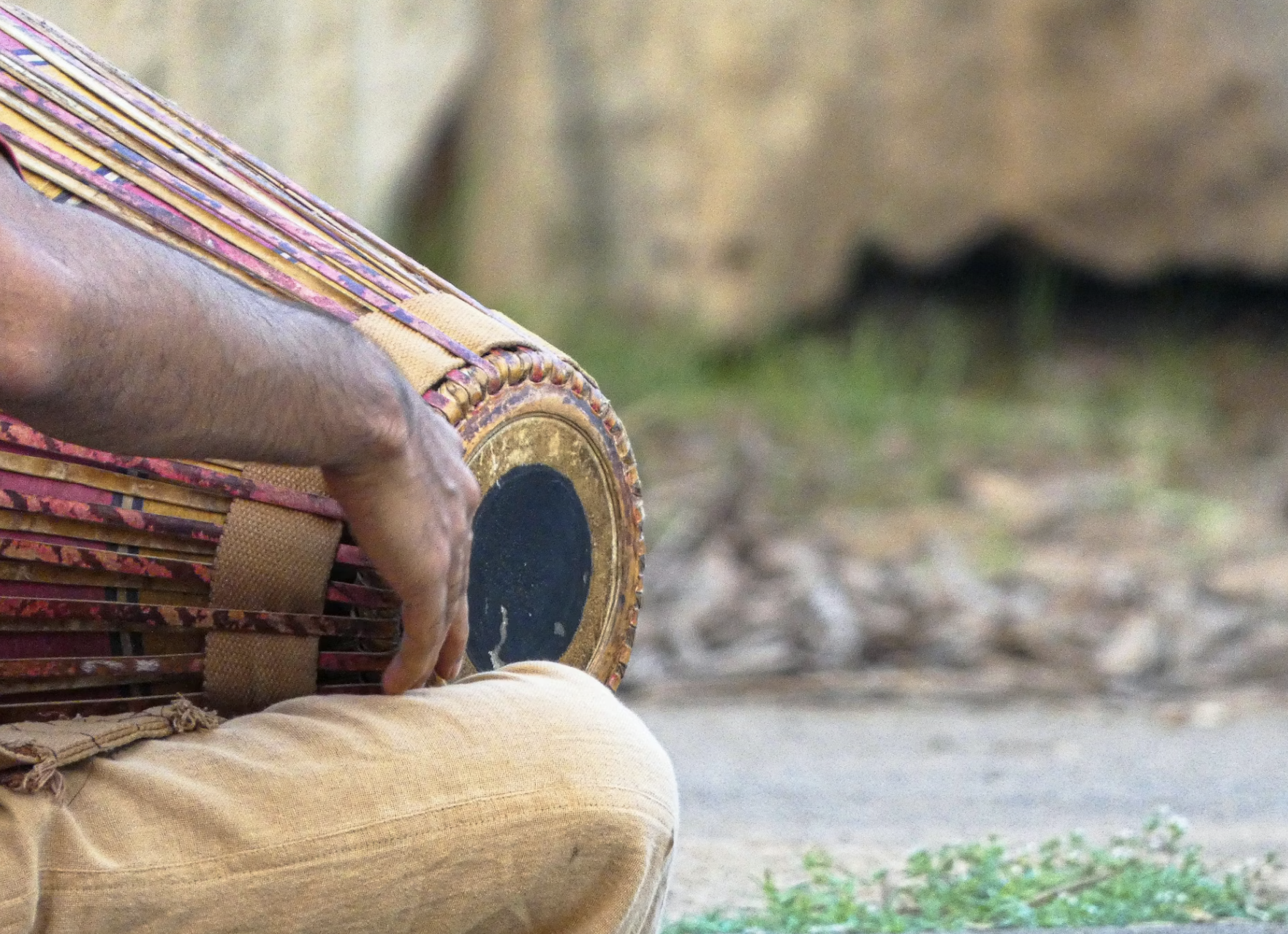
Finally, remember that accompanists deserve recognition too. The violinist, the mridangist, the tabla player, the tanpura artist — they are not background fixtures. Acknowledging their contribution, either through applause during the concert when they are featured or through a word of appreciation afterwards, reflects the mark of a true rasika. When a mridangam artist like Patri Satish Kumar or a tabla maestro like Zakir Hussain delivers a stunning tani avartanam or solo, that moment deserves the same reverence as the lead artist's finest phrase.
Concert etiquette, at its heart, is not about rigid rules. It is about sabhyata — a word that means both "civilised conduct" and, quite literally, "the quality of being worthy of the sabha." The music asks something of us: our presence, our attention, our emotional honesty. The least we can offer in return is our respect.